
Tennis elbow, or lateral epicondylitis, often shows up as pain on the outside of the elbow that can make gripping, lifting, or twisting difficult. But as the NOI Group video “Tennis Elbow Explained” highlights, this pain isn’t just about local tissue damage. It’s also about how your nervous system processes and protects that area.
The body’s protective systems can become extra sensitive after repeated strain. This sensitivity can come from changes in the radial nerve (part of the peripheral nervous system) and changes in how the brain represents the elbow (the central nervous system). When the elbow becomes “louder” in the brain’s map, even light movement can trigger pain.
Rest Isn’t the Whole Answer
Resting may quiet pain for a short time, but it doesn’t retrain the system. Muscles, tendons, and nerves all need movement and safe input to recover. The goal isn’t to avoid pain — it’s to move within safe limits and teach your body that these positions are not a threat.
The Role of Graded Exposure
Graded exposure is about reintroducing movement gently and meaningfully. You start with easy, pain-free ranges and slowly expand as your system adapts. This approach reduces sensitivity while building confidence in movement.
Neural Mobilization: Moving the Radial Nerve
How It’s Done
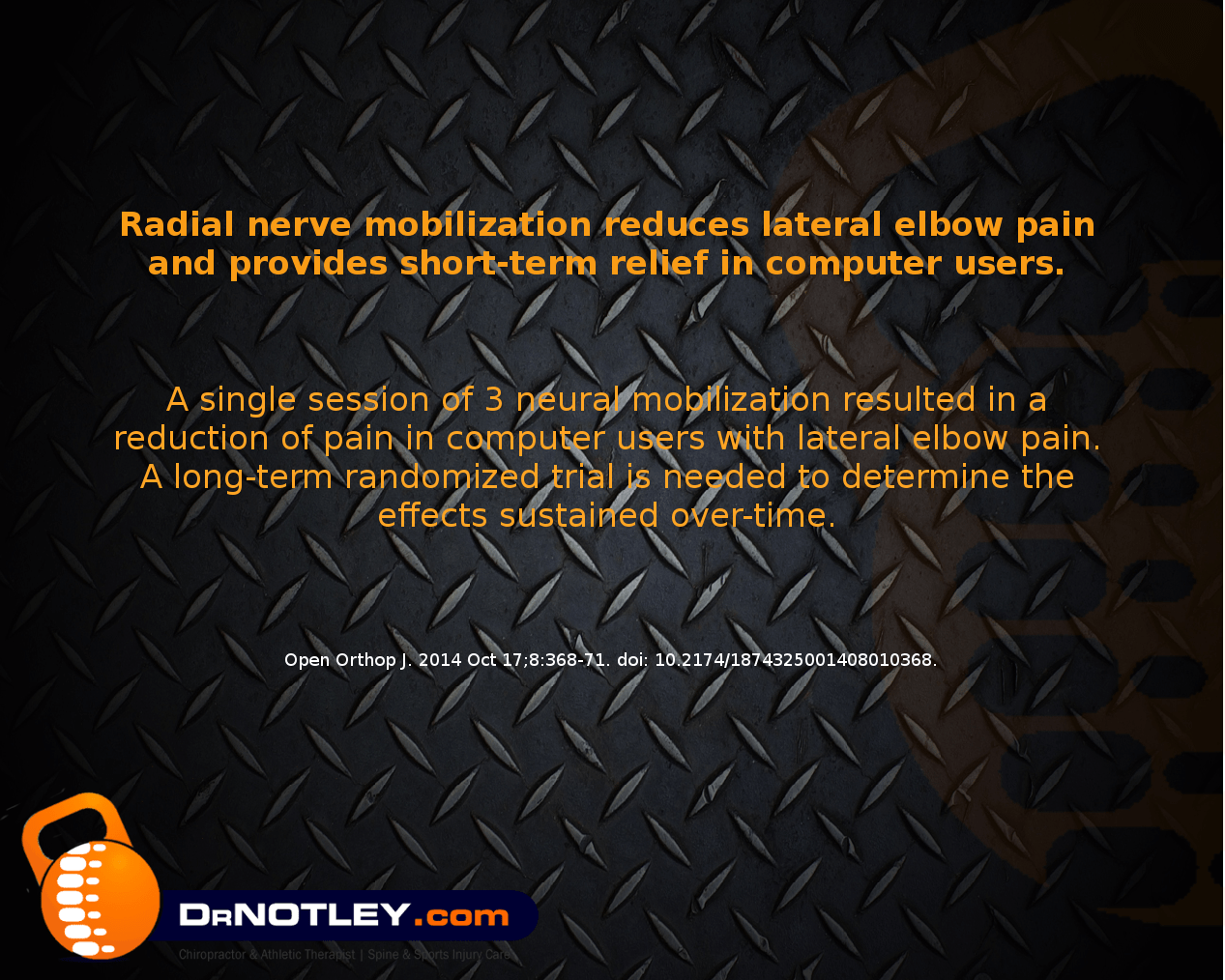
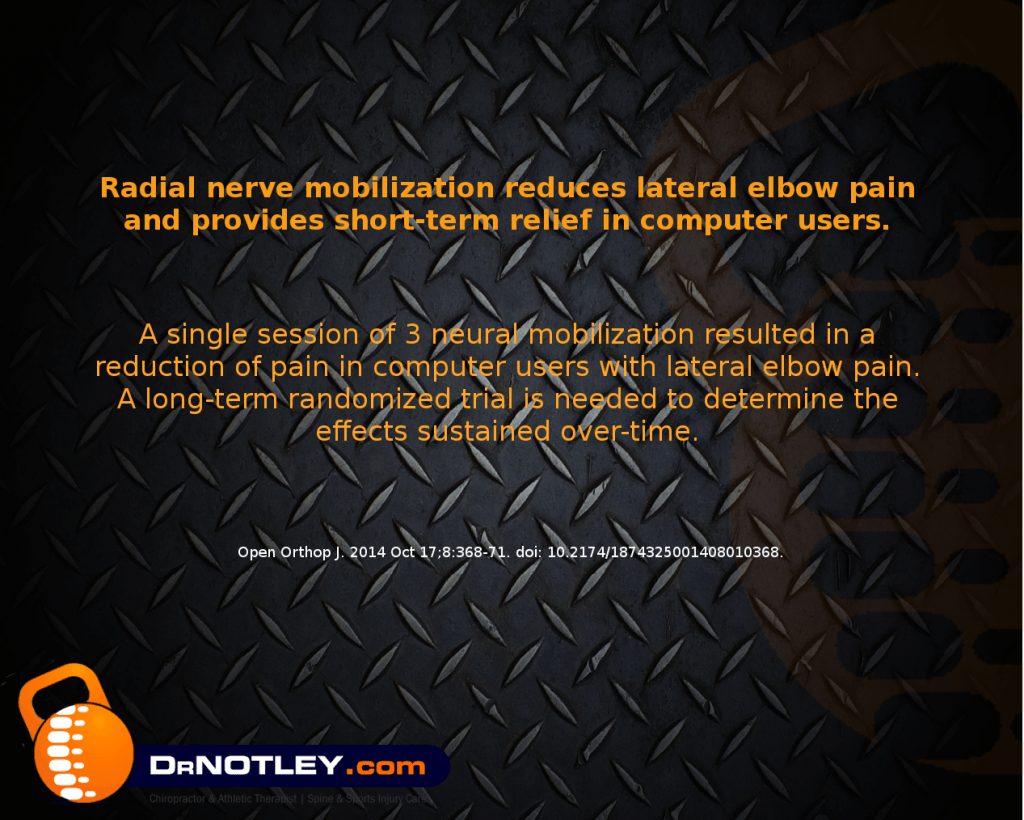
From a starting position — shoulder down, elbow straight, wrist and thumb flexed — gentle coordinated movements like looking up or down can create a “slider” effect through the nerve. These movements are light, smooth, and non-aggressive.
Retraining the System Through Play and Context
What makes this effective isn’t just the stretch; it’s the reassurance the nervous system gets. By safely moving through sensitive positions, the brain updates its map of the area, realizing that movement is not harmful.
As the video shows, the best recovery happens when movement becomes meaningful. Simple tasks — looking at your hand, tracing figure-eights with your arm, or mimicking a gentle sword swing — bring rhythm, attention, and fun back into motion.
These activities blend sensorimotor retraining with context. Doing them in different environments, at different times of day, or even with playful metaphors (“stabbing the dragon,” “the politician’s tip”) helps the brain relearn flexibility and safety.
Integrating Manual Therapy and Movement
As a Winnipeg chiropractor and athletic therapist, I often blend these ideas with hands-on care and progressive loading. Manual therapy, soft tissue work, and dry needling can calm the system, but the long-term recovery comes from movement.
Combining neural sliders, graded exposure, and progressive tendon loading helps both the tissues and nervous system adapt. The result is less pain, greater freedom of motion, and more confidence using the arm in daily life.
Takeaway
Tennis elbow is a metaphor — not just a mechanical problem, but a conversation between your elbow, your nerves, and your brain. Understanding and retraining that conversation through safe, playful movement is what truly helps people return to the activities they love.
If you’re in Winnipeg and dealing with ongoing elbow pain, a careful assessment can determine whether the issue is coming from the tendon, nerve, or both — and help guide you back toward confident, pain-free movement.
Originally posted on May 17, 2022 @ 4:38 pm