

Are your shoulders, elbows, or wrists feeling stiff or painful? Do you want a simple, flowing shoulder mobility drill that not only improves shoulder mobility but also gently encourages your nerves to move freely? The long-arm teacup drill might be exactly what you need. This smooth, figure-eight pattern looks like a simple shoulder mobility drill, but it’s much more than that. By guiding your arms through arcs and rotations, it naturally slides the radial, median, and ulnar nerves, helping reduce tension and improve coordination throughout your upper limb.
In this article, we’ll break down the teacup mobility drill, show how each phase engages specific nerves, and explain why this one exercise can be a powerful addition to your warm-up or rehab routine.
The Long-Arm Teacup Shoulder Mobility Drill
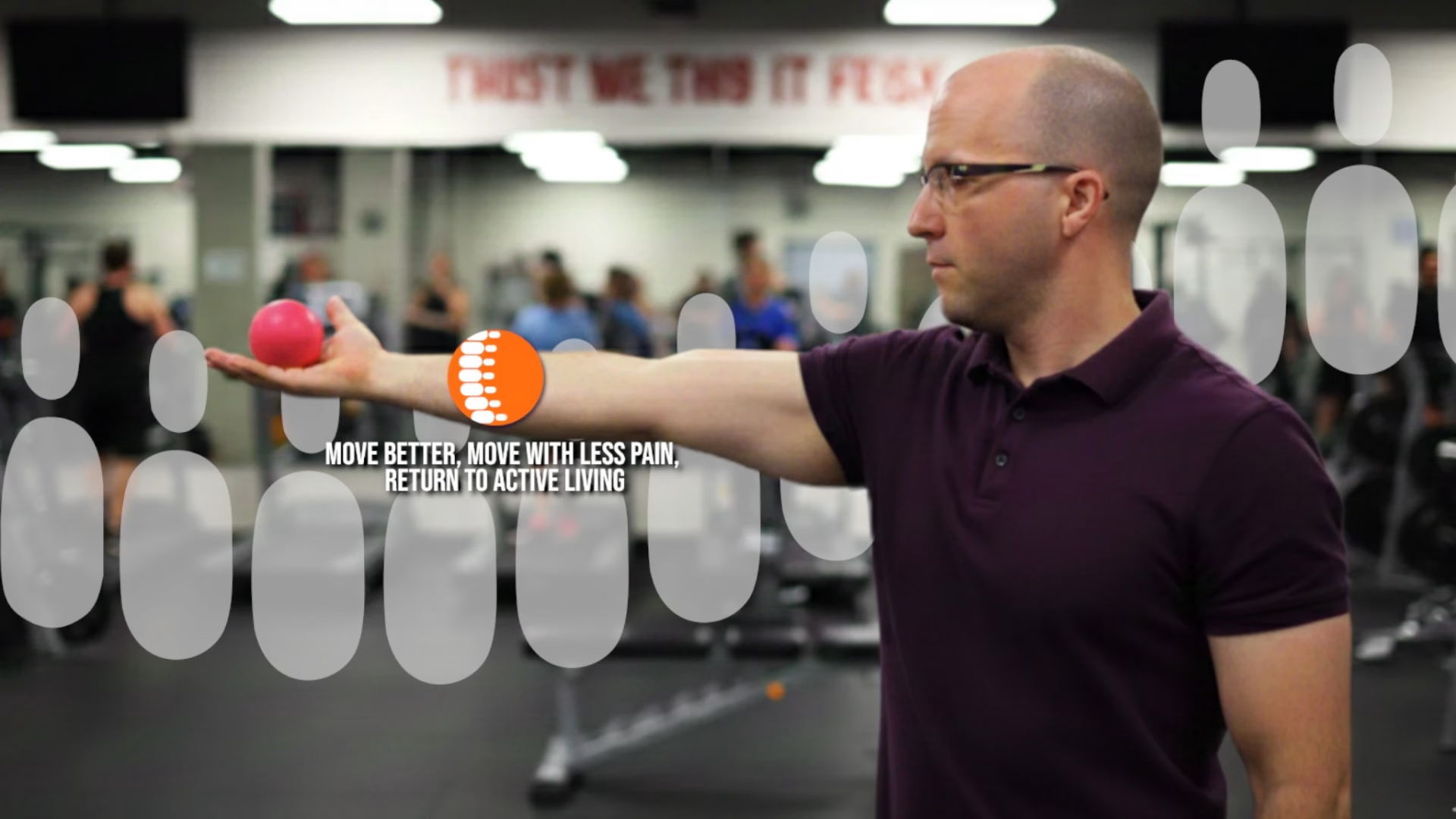
When you view the second exercise of the video, The long-arm teacup drill starts with an open palm as if balancing a cup of tea. The movement begins by leading with the pinky, sweeping the hand under the armpit, moving out to the side, circling over the shoulder, and returning to the start. The long-range version continues behind the back, arcs wide, bends through the elbow toward the opposite shoulder, and completes a full figure-eight pattern.
Progressions include adding a small load, performing the movement on one leg, exploring it from a squat, or performing it from a bear-position plank. While this drill is primarily a shoulder mobility exercise, the layered wrist, elbow, and shoulder changes naturally place the major nerves of the upper limb through positions used in nerve flossing exercises.
Nerve Flossing with the Teacup Mobility Drill
While the long-arm teacup drill is a powerful shoulder mobility exercise, its value goes beyond joint movement. Each phase of the drill gently guides the radial, median, and ulnar nerves through their natural pathways, promoting smooth sliding, reducing tension, and enhancing upper limb neural mobility.
Think of it as a dynamic nerve flossing exercise integrated into a fluid mobility pattern: your nerves move with the arm, elbow, and wrist in coordinated arcs, rather than being stretched or compressed aggressively. This section will break down how each nerve is engaged during the drill and why incorporating neural sliding can support joint function, reduce stiffness, and improve movement efficiency.
Radial Nerve Activation
The radial nerve is most engaged during the back and down phases of the long-range pattern. When the arm sweeps behind the back, the wrist extends and the forearm pronates while the shoulder internally rotates—positions mirrored in traditional radial nerve glides. This phase promotes gentle sliding of the radial nerve along the posterolateral arm without aggressive tension, improving overall upper limb mobility.
References:
Basson, A., et al. (2017). Neural mobilization for musculoskeletal conditions. Cochrane Database of Systematic Reviews.
Nee, R. J., et al. (2012). Neural tissue management for lateral epicondylalgia. J Orthop Sports Phys Ther.
Median Nerve Activation
As the arm moves from the underarm sweep to the outward and upward arc, the palm rotates upward and the elbow straightens. These joint combinations mimic median nerve glides, providing gentle sliding along the anterior shoulder, biceps, and forearm. The rhythmic figure-eight motion of the teacup mobility drill reduces tension while improving coordination and nerve mobility.
References:
Coppieters, M. W., & Butler, D. S. (2008). Do sliders slide? J Orthop Sports Phys Ther.
Louw, A., et al. (2017). Neurodynamic techniques in carpal tunnel syndrome. J Hand Ther.
Ulnar Nerve Activation
The ulnar nerve is most involved as the arm reaches the top of the rotation and the elbow begins to bend. Combined shoulder abduction, external rotation, and elbow flexion encourage ulnar nerve excursion without extreme stress. This portion of the drill helps improve medial elbow and forearm mobility while maintaining smooth neural sliding.
References:
Shacklock, M. (2005). Clinical Neurodynamics. Elsevier.
Ballestero-Pérez, R., et al. (2019). Neurodynamic techniques for ulnar neuropathy. J Clin Med.
Why This Drill Works
By combining shoulder rotation, elbow flexion–extension, wrist rotation, and trunk movement, the teacup shoulder mobility drill acts as a full-arm mobility pattern. Each phase gently mobilizes the radial, median, and ulnar nerves while improving wrist, elbow, and shoulder coordination. It’s versatile as a warm-up, rehab exercise, or performance prep tool, and can be scaled by adding light loads or balance challenges.
Originally posted on May 17, 2022 @ 4:39 pm