

Low back pain is one of the most common reasons people seek care, and almost everyone with back pain is told to “strengthen their core.” The problem is that core exercises for low back pain are often discussed as if they are one single approach. In reality, they include different exercise styles that load the body in different ways and aim to produce different outcomes.
A recent large systematic review and meta-analysis examined how different types of core exercises for low back pain affect pain and function in people with chronic symptoms. The findings challenge the idea that one core exercise method is clearly superior and instead point toward shared benefits across approaches.
For people dealing with ongoing back pain in Winnipeg, including the downtown and St. Vital areas, this matters because exercise advice is often generic. This article explains what the study actually found, what types of exercises were included under each category, and what we can learn about exercise prescription using FITT (Frequency, Intensity, Time, Type) principles. A follow-up article will address how often core exercises for low back pain should be performed and how progression may matter over time.

What the Study Looked At
The review pooled data from 57 randomized controlled trials involving more than 7,700 adults with chronic non-specific low back pain. Each trial investigated a form of core exercises for low back pain and compared it with minimal intervention, usual care, or another exercise-based approach.
The primary outcomes were pain intensity and physical function. Importantly, the authors did not compare branded exercise programs. Instead, they grouped exercises based on shared characteristics, allowing a comparison of exercise styles rather than labels.
Core Exercises for Low Back Pain: The Main Finding
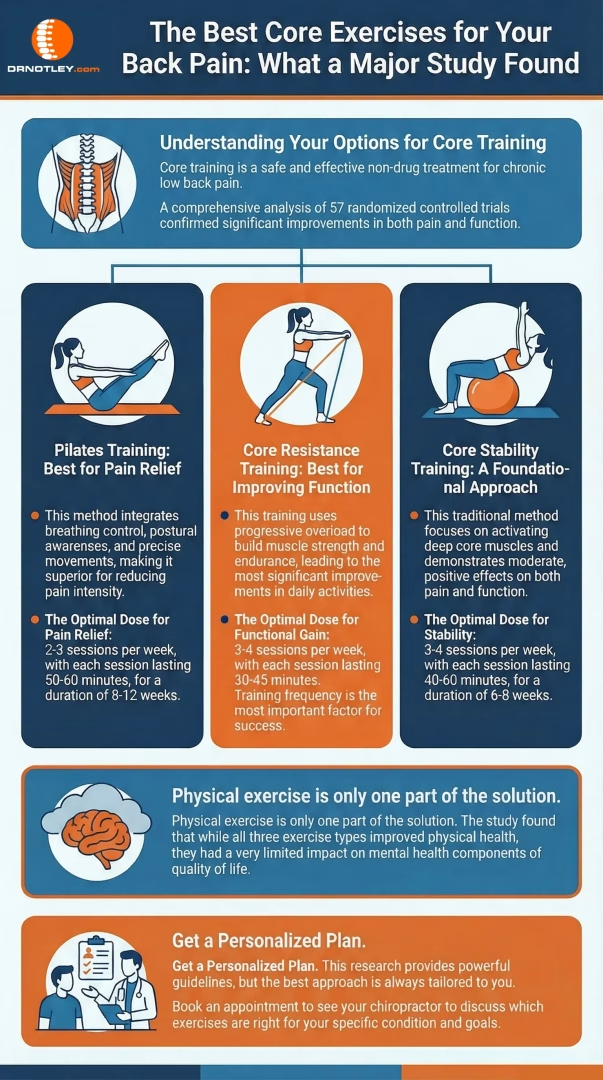
All three categories of core exercises for low back pain reduced pain compared with control interventions. No exercise style was statistically superior to the others for pain reduction.
Resistance-based core exercises produced the most consistent improvements in physical function. Pilates-style core exercises showed the largest numerical pain reduction, but this difference did not reach statistical significance.
In practical terms, the pain outcomes overlapped substantially across exercise types.
Types of Core Exercises for Low Back Pain Used in the Studies
Core Stability Exercises for Low Back Pain
Core stability exercises focus on improving trunk control and endurance through low-load, slow, and deliberate movement. The spine is typically maintained near neutral while the limbs move, with little or no external resistance.
These core exercises for low back pain are often used early in rehabilitation or when symptoms are easily aggravated.
Representative examples include dead bug variations, bird dog progressions, side plank holds, and quadruped arm or leg lifts. Across studies, repetitions were controlled and stopped before loss of movement quality.
Resistance-Based Core Exercises for Low Back Pain
Resistance-based core exercises for low back pain load the trunk musculature through external resistance or higher internal demands. These exercises resemble traditional strength training and often challenge the trunk during standing or dynamic tasks.
This category demonstrated the most consistent improvements in physical function in the meta-analysis.
Examples include loaded carries, Pallof press variations, squats or deadlifts performed with deliberate trunk bracing, and cable-based rotation or anti-rotation exercises. Resistance was progressed gradually over time in the included trials.
Pilates-Style Core Exercises for Low Back Pain
Pilates-style core exercises for low back pain emphasize controlled spinal movement, breath coordination, and sustained low-to-moderate muscular effort. Exercises are commonly performed in supine or side-lying positions and may involve spinal flexion, extension, or rotation.
Pilates-style exercise showed the largest numerical pain reduction, although it was not statistically superior to the other approaches.
Common examples include modified hundred variations, single-leg stretch exercises, spine curl or bridge progressions, and side-lying leg series with trunk control emphasis. Most studies used mat-based Pilates rather than reformer-based systems.
FITT Principles Across Core Exercises for Low Back Pain
Despite differences in exercise style, the FITT characteristics of core exercises for low back pain were remarkably similar across studies. Most programs were performed two to three times per week, with sessions lasting between 30 and 60 minutes.
Interventions typically lasted 6 to 12 weeks. Exercise intensity was rarely quantified using traditional strength measures. Instead, intensity was managed through exercise complexity, time under tension, and perceived effort, with gradual progression over time.
This overlap likely explains why pain outcomes were similar across exercise types. Consistency and sufficient exposure may matter more than the specific exercise label.
Why Function May Respond Differently
Resistance-based core exercises for low back pain likely improved function more consistently because they expose individuals to higher loads and task-relevant demands. Activities such as lifting, carrying, and prolonged standing require load tolerance in addition to control.
This does not suggest that resistance training is universally superior. It highlights the importance of matching exercise selection to functional goals.
What This Means for Patients
If you are using core exercises for low back pain, there is no single method you must follow. Pilates-based exercise, stability-focused exercise, and resistance-based training can all reduce pain.
The more important factors are consistency, appropriate progression, and choosing exercises that match your tolerance and goals. Pain relief and functional improvement are related but distinct outcomes.
For patients in Winnipeg, downtown Winnipeg, and the St. Vital area, this often means moving beyond trial-and-error programs and toward an approach that matches your work demands, activity level, and current pain sensitivity.
Transparency and Scope
This article is based on a single systematic review and meta-analysis of randomized controlled trials in adults with chronic non-specific low back pain.
Exercise examples are provided to illustrate the general characteristics of each exercise category studied. They do not represent complete programs, individualized prescriptions, or guarantees of outcome.
Clinical decisions should always consider individual presentation, goals, tolerance, and comorbidities.
A follow-up article will examine how often core exercises for low back pain should be performed, how progression influences outcomes, and how volume can be adjusted over time.
For those in Winnipeg, including downtown and St. Vital, this evidence is most useful when it is applied to your specific situation rather than copied from a generic program.
Frequently Asked Questions About Core Exercises for Low Back Pain
What are the best core exercises for low back pain?
There is no single best option. Research shows that Pilates-style exercise, core stability exercise, and resistance-based core training all reduce pain in people with chronic low back pain. The best choice depends on symptoms, goals, and tolerance.
Is Pilates better than other core exercises for low back pain?
Pilates showed slightly larger numerical pain reductions in some studies, but it was not statistically superior to other exercise styles. This means it is not clearly better, just different in how it loads the body.
Do core stability exercises work for low back pain?
Yes. Core stability exercises consistently reduce pain compared with minimal care. They tend to focus on control and endurance rather than strength and may be useful early in rehabilitation.
Is resistance training safe for low back pain?
When progressed appropriately, resistance-based core exercises were associated with improvements in physical function and pain reduction. These exercises may be especially helpful when returning to lifting, work, or sport demands.
How long does it take for core exercises to help low back pain?
Most studies reported improvements after 6 to 12 weeks of consistent training performed two to three times per week. Individual responses vary based on starting pain levels, activity demands, and how well the exercises are matched to the individual.
If your back pain keeps returning, progresses unpredictably, or limits work or activity, individualized guidance can help determine which type of core exercise and progression makes sense.
For patients in Winnipeg, downtown Winnipeg, or St. Vital, an in-office assessment allows exercise selection and progression to be tailored to your goals rather than guessing what might work next.