How to Get Off the Toilet With Back Pain (Without Making It Worse)
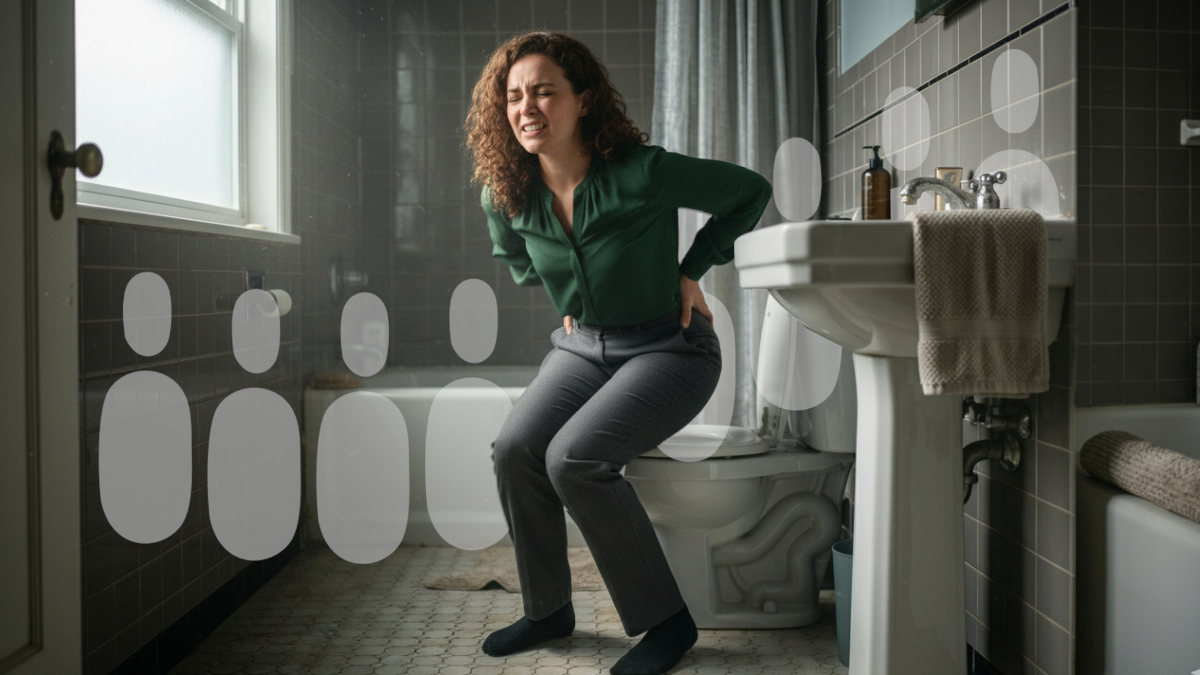
Lower back pain when getting off the toilet is one of the most common movement complaints we see. If standing up from sitting triggers sharp pain or stiffness, the issue is usually mechanical — not that something is “out of place.”
The way you move during the sit-to-stand transition determines how much stress goes through your lumbar spine.
Understanding that mechanism makes it easier to correct.
Why Back Pain Happens When Getting Off the Toilet
When you sit on a low surface, your lower back moves into flexion (forward bending). To stand up, you lean forward, shift your weight over your feet, and extend through the hips and spine.
That transition moves the lumbar spine from flexion into extension under load.
Sitting increases disc pressure compared to standing, and deeper bending increases strain on posterior disc structures and surrounding tissues. If those tissues are sensitive, pain getting up from the toilet or a chair is common.
Many people notice lower back pain when standing up from sitting that eases after walking. When symptoms improve with movement, load sensitivity — often called flexion intolerance — is frequently involved.
Could It Be Something Else?
Not all sit-to-stand back pain is disc-related.
If pain increases when fully upright, extension-sensitive or facet-related irritation may contribute.
If pain is strongly one-sided and aggravated by uneven weight shifting, the sacroiliac joint can play a role.
A proper movement assessment differentiates lumbar disc irritation, facet sensitivity, sacroiliac involvement, and hip mobility restrictions.
How to Get On and Off the Toilet With Back Pain (Without Making It Worse)
How to Get Off the Toilet With Back Pain Safely
The problem is usually movement strategy, not the toilet itself. Rounding the lower back and pushing straight up increases shear and compression stress.Instead, use a controlled hip hinge to shift load into your legs.
Why the Hip Hinge Works
- Reduces lumbar flexion stress
- Shifts load into glutes and quadriceps
- Improves balance and control
- Decreases pain during sit-to-stand
This is the same strategy used in proper squatting and dead-lifting.
How to Sit Down With Lower Back Pain
- Stand with feet slightly wider than hip-width
- Push your hips back (not straight down)
- Keep a neutral spine
- Place hands on your thighs for support
- Lower yourself slowly
- Use a grab bar or counter if needed
Avoid collapsing into a rounded posture.
How to Stand Up Without Aggravating Your Back
- Bring your feet underneath you
- Shift your weight forward onto your feet
- Maintain a neutral spine
- Place hands on your thighs
- Drive through your legs
- Use a rail or support if needed
Shift the movement onto your hips. Control the transition. Drive through your legs.
Common Mistake
Rounding forward and pushing straight up from the lower back increases shear and compression forces on sensitized tissues.
Small Changes That Help Immediately
- Raising the toilet seat reduces required flexion.
- Using arm support decreases spinal load.
- Slowing the movement improves control.
- Avoid prolonged slouched sitting before standing.
- If gentle extension movements reduce symptoms, perform them after longer sitting periods.
These adjustments do not resolve the underlying tolerance issue, but they reduce aggravation while capacity improves.
When to Seek Care
Seek urgent medical evaluation if you experience progressive leg weakness, significant numbness, loss of bowel or bladder control, fever, unexplained weight loss, or recent trauma.
If your back pain when getting off the toilet persists, a structured movement assessment can determine whether the driver is discogenic, facet-related, sacroiliac, or hip-based.
At our clinic, we combine chiropractic and athletic therapy to correct movement strategy and progressively rebuild load tolerance so daily transitions like standing from sitting are no longer painful. Learn more about our approach to low back pain treatment in Winnipeg here: [internal link].
The Bottom Line
Back pain when standing up from the toilet most often reflects reduced tolerance to flexion under load. It does not automatically mean your spine is unstable or damaged.
- Modify the movement strategy.
- Shift load into the hips.
- Build capacity.
If symptoms persist, they can be assessed and improved.
Book an evaluation and we will identify the pain driver, correct the pattern, and progressively rebuild your tolerance.
FAQ
Is it bad to sit on the toilet with back pain?
Sitting puts more stress on the irritated tissues. Lessening how long you are sitting helps reduce the irritation. This is not limited to sitting on toilets.
What if I don’t have strong legs?
sing hand support (grab bars, counter, sink) reduces load while you build strength. Progressive strengthening of glutes and quads is recommended.
Should I lean forward when standing up?
Yes — but from the hips, not the spine. Leaning forward shifts your centre of mass over your feet, making standing easier and safer.
Does a raised toilet seat help?
Yes. Increasing seat height reduces required hip and knee flexion, decreasing lumbar stress — especially helpful in acute pain phases.
Is this safe for disc injuries?
Neutral spine hip hinging typically reduces disc irritation compared to lumbar flexion. However, tolerance varies by individual presentation.