

Understanding Lower Back pain
Back pain is extremely common, but that does not make it simple. It can begin suddenly after lifting or bending, or develop gradually without a clear starting point. For some people it resolves quickly. For others, it becomes a recurring or persistent issue that affects work, exercise, or daily life.
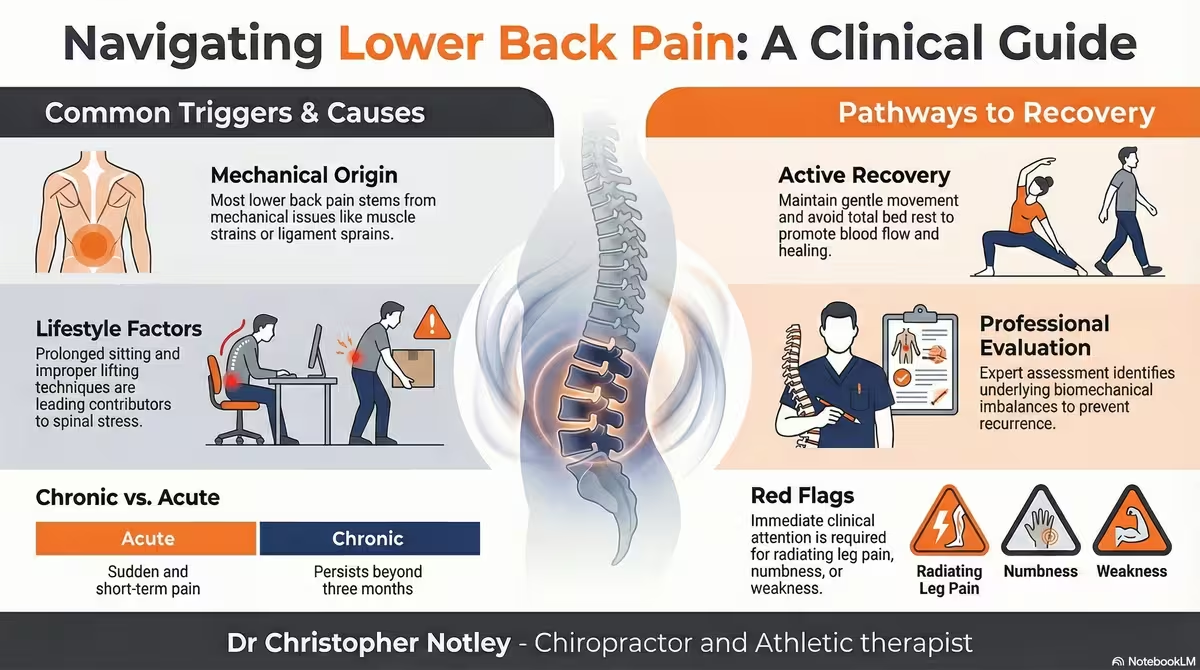
Although back pain is often described in terms of discs, joints, or muscles, most cases are not the result of serious damage. Instead, back pain typically reflects changes in how the spine is moving, how tissues are tolerating load, and how the body responds to stress and activity over time.
Understanding the pattern of your back pain is more useful than focusing on a single structure. Different presentations require slightly different approaches, and identifying the right pattern helps guide effective care.
This page outlines the most common types of back pain and how they are typically assessed and managed.
Why Back Pain Happens
Back pain is best understood as a movement and load tolerance issue rather than a fragile structure problem. Identifying how your back responds to movement and stress helps guide effective treatment and recovery.
Back pain is common, but that does not mean it is random or mysterious. In most cases, it develops when the back is asked to handle more than it is currently prepared for — whether that is a sudden lift, a long period of sitting, a return to activity, or simply the accumulation of stress over time.
The lower back is built to move and carry load. Muscles, joints, discs, and connective tissues work together to support everyday tasks. When one part becomes irritated or overloaded, the area can become more sensitive. Pain is often a sign that your back is not tolerating current demands well — not necessarily that something is seriously damaged.
Many people are told their pain is due to a disc bulge, arthritis, or degeneration. While these findings can sound concerning, they are also very common on imaging, even in people who have no pain at all. For that reason, understanding how your back moves and responds to activity is often more helpful than focusing on a single scan result.
Back pain usually reflects a combination of movement patterns, load tolerance, previous injury, physical conditioning, and stress. Identifying which factors are most relevant in your case allows care to be more specific and more effective.
The goal is not simply to quiet symptoms, but to improve how your back handles the demands of daily life.
Common Patterns of Back Pain
Not all back pain behaves the same way. Identifying the pattern of symptoms is often more useful than focusing on a single structure. Below are some of the most common presentations.
Disc-Related Back Pain
This pattern of discogenic lower back pain is often associated with pain that worsens with prolonged sitting, bending forward, or lifting. Some people notice stiffness in the morning or discomfort that builds throughout the day.
In certain cases, symptoms may travel into the buttock or leg if a nerve becomes irritated. Disc-related pain is usually sensitive to load and posture, but often responds well to specific movement strategies and gradual reloading.
Facet or Joint-Related Back Pain
This type of back pain is often more noticeable with prolonged standing, walking, or leaning backward. It may feel localized to one side of the lower back and can sometimes refer into the buttock.
These symptoms are often mechanical in nature and influenced by how the joints are moving and tolerating load.
Muscle or Movement-Related Back Pain
Some episodes of back pain occur after a change in activity, a new exercise routine, or an increase in workload. The pain may feel diffuse or tight rather than sharp, and movement may feel guarded.
This presentation often reflects reduced tolerance to load or changes in movement control rather than structural injury.
Persistent or Recurrent Back Pain
For some people, back pain becomes cyclical. It may flare during stressful periods, after inactivity, or with changes in routine. Imaging findings may not fully explain ongoing symptoms.
Persistent back pain often involves changes in sensitivity, movement confidence, and load tolerance. A broader approach is typically needed.
Back Pain with Leg Symptoms (Radicular Pain)
When back pain is accompanied by numbness, tingling, or pain travelling down the leg, a spinal nerve may be irritated.
This pattern requires careful assessment to determine the source and guide appropriate management.
When Is an Assessment Helpful?
Many episodes of low back pain improve within a few weeks, especially when movement is maintained and activity is gradually resumed. Mild stiffness after an unusual lift or long period of sitting does not always require formal treatment.
That said, early guidance can be valuable when:
- Pain is not clearly improving
- Symptoms are recurring or unpredictable
- You are modifying activity out of fear of aggravation
- Pain is limiting work, training, or sleep
- Leg symptoms such as numbness, tingling, or weakness are present
- You are unsure how to safely progress activity
An assessment is not only for severe cases. It can help clarify the pain pattern, reduce uncertainty, and provide a structured plan to restore load tolerance before the issue becomes prolonged or cyclical.
Urgent medical evaluation is recommended if back pain is accompanied by significant trauma, unexplained weight loss or fever, loss of bladder or bowel control, progressive leg weakness, or numbness in the saddle region. These presentations are uncommon but require prompt medical attention.
For most people, back pain responds well to targeted movement and load management strategies. The earlier the pattern is understood, the easier it is to guide recovery.
Next Steps
If you are experiencing back pain and are unsure which pattern fits, a structured assessment can help clarify what is driving your symptoms and what to do next.
Rather than focusing solely on imaging findings or temporary symptom relief, the goal is to understand how your back is functioning, what it is currently sensitive to, and how to improve its tolerance to movement and load.
A detailed evaluation looks at movement, strength, load response, and contributing lifestyle factors. From there, care can be tailored to the specific presentation — whether that involves movement modification, progressive loading, manual therapy, or a structured return-to-activity plan.
To learn more about how back pain is assessed and managed in our clinic, visit the Back Pain Care page.
How do I know if my back pain is just a muscle strain or something more serious?
Muscle strains typically improve significantly within a few days of rest and gentle stretching. If your pain is deep, aching, or stays centered in the spine, or if you feel sharp “shocks” traveling into your glutes or legs, it may involve the spinal discs or joints. A professional evaluation is the only way to accurately identify the specific “pain generator.”
Should I stay in bed until the pain goes away?
Modern research strongly advises against prolonged bed rest. Total inactivity can actually lead to joint stiffness and muscle weakness, which delays recovery. We recommend “relative rest”—staying active within a pain-free range—to keep blood flowing to the injured tissues and promote faster healing.
Why does my back pain keep coming back every few months?
Recurrent back pain is often a sign that while the initial pain “calmed down,” the underlying movement dysfunction or tissue sensitivity was never fully addressed. We focus on “rehabilitation” rather than just “relief,” helping you build the structural resilience needed to break the cycle of chronic flare-ups.
Is heat or ice better for lower back pain?
Generally, ice is best for acute injuries (the first 48–72 hours) to reduce inflammation. Heat is often more effective for chronic or recurring pain to relax tight muscles and improve circulation. However, the “best” choice is often whichever provides you the most comfort and allows you to start moving again.
When should I be concerned about “Red Flags”?
While most back pain is mechanical and non-emergency, you should seek immediate medical attention if you experience “Red Flags” such as a loss of bowel or bladder control, numbness in the “saddle area” (groin), sudden weakness in your legs, or pain that is accompanied by an unexplained fever.